WishboneSafety, Inc.™ manufactures the P.E.R.T.S.® (Personal Emergency Release Tether System) and the S.E.R.T.S.® (Suspension Emergency Release Tether System) for further details on the models, please click the tab "Products".
Since 2003, Wishbones™ P.E.R.T.S.® and S.E.R.T.S.® have
been manufactured in the United States, adhering to the highest industry standards of quality and craftsmanship. This commitment is evident in every Wishbone™ product
currently in use.


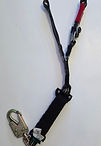

Why a WishboneSafety™ P.E.R.T.S.® or S.E.R.T.S.®?
This message addresses three important areas of concern:
-
Worker Safety
-
Pilot Safety
-
Management Responsibility
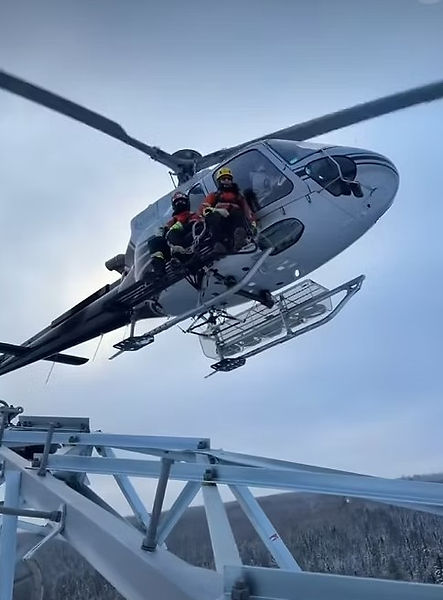
While working on energized Powerlines from a Helicopter whether it’s from a Platform or from a Suspended Sling (Human External Cargo-HEC) it deals specifically with the time it takes for a Lineman to transfer from the Helicopter to a tower or conductor. This is the time that the Helicopter is tethered through the lineman’s harness and lanyards to the tower or conductor and is critical to the safety of the Helicopter and all personnel or loads. This time can be measured as little as a couple seconds to an extended period of time measured in minutes depending on the task at hand and the flight conditions affecting the Helicopter. (See FAA advisory circular HEC).
Workers perspective - The WishboneSafety, Inc.™ P.E.R.T.S.® and S.E.R.T.S.® is a “Y” lanyard that is connected to a Line worker's body harness (the bottom connector of the “Y”) and the two lanyard ends (top of the ”Y”) one which is the releasable leg (red-side) and the opposite leg (non-red) is the non-release leg. During transfer from the Helicopter or the Suspended line the Release leg of the “Y” lanyard is connected to the helicopter and is rated up to 3000 lbs. and ultimate breaking strength of greater than 5000 lbs. The non-release leg is connected to the structure or conductor. During the time the lineman is connected to both the Helicopter and the Structure (tower) or Conductor (cable) and the Helicopter pulls away for whatever reason the two “Y” Legs will be pull in opposite directions and when the pulling force reaches approximately 175 to 250 lbs. the release side (Red-side) of the “Y” will automatically release from the P.E.R.T.S.® or S.E.R.T.S.®. The lineman will remain with the Tower Structure or Conductor not the Helicopter. (See Rob Carney letter actual account).
Pilots Perspective – The Pilot is faced with precision flying during operations involving Line work on Energized or Non-Energized powerlines for maintenance and constriction. In the case of Platform work the lineman is hovering inches from a permanent Structure or a movable Conductor. The Lineman's attention is mostly directed outside the Helicopter whether it is Platform work or Sling work with only quick glances inside the cockpit to monitor important power and engine instruments and annunciator panel. The Lineman has a high workload when conducting operations close to obstacles or when positioning a HEC on a 100 foot long line onto a Conductor or Structure. Wind gusts and turbulence also increase the difficulty in maintaining a stable condition for the Lineman to work or Hook Up to Transfer. Anything from wind upsets or mechanical failure can cause an "Emergency Response" requirement for the Pilot. The FAA requires the Pilot to take immediate actions to mitigate the emergency including to jettison the HEC if the Helicopter is tethered to the Structure or Conductor. In the case of a long line, it requires the pilot to open a lock gate and then toggle the Sling release all which takes additional seconds before he can apply corrective control inputs to the Helicopter. However, if the Lineman is using the P.E.R.T.S.® or S.E.R.T.S.® system he does not need to waste any time thinking about anything other than reacting with immediate control inputs to mitigate the emergency condition. By making an immediate emergency pull away from the Structure or Conductor, the Pilot will only need to concern himself with the safety of the Helicopter not the Lineman. The difference of several second reaction time can make the difference between an accident or a non-event.
Management Perspective – Mitigating risk is a major consideration in all Line work and Helicopter Operations. Personnel Safety is the paramount concern in the workplace environment. The P.E.R.T.S.® and S.E.R.T.S.® system of automatic releasable “Y” lanyards are the only system that mitigates a tethered Helicopter because when connected using the WishboneSafety™ P.E.R.T.S.® and S.E.R.T.S.® system the Helicopter is not Tethered and requires no action by the pilot to save the Helicopter and the Lineman. The P.E.R.T.S.® and S.E.R.T.S.® was invented by a pilot to save the pilot's and linemen’s lives.
The Company benefits from the reduced risk liability that using P.E.R.T.S.® and S.E.R.T.S.® in its Powerline applications can bring to the table, saving lives and equipment translates into saving money.


ABOUT US
WishboneSafety, Inc.™ is a Florida-based safety equipment company since 2003 focused on fall-protection systems for elevated workers, especially people using aerial lifts, bucket trucks, scaffolds, and similar equipment. The company’s main product is the Wishbone™ P.E.R.T.S.® (Personal Emergency Release Tether System) and S.E.R.T.S.® (Suspension Emergency Release Tether System) a specialized breakaway Y-lanyard designed to keep workers attached to a secure anchor point if a movable anchor fails.
Wishbone™ P.E.R.T.S.® and S.E.R.T.S.® have been manufactured in the United States, adhering to the highest industry standards of quality and craftsmanship. This commitment is evident in every Wishbone™ product currently in use.
The Wishbone™:
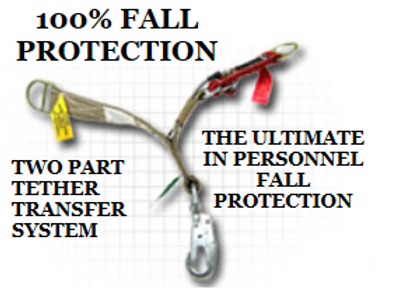
The "Wishbone™ " safety device Model P.E.R.T.S.® (Personal Emergency Release Tether System) S.E.R.T.S.® (Suspension Emergency Release Tether System) area "Y" lanyard type device with two legs for the connections of positioning lanyards of which one leg is automatically releasable when there is a predetermined load spreading the two lanyard connecting anchor points apart. The third end is a swivel double locking snap for connection to a personnel body harness. WishboneSafety, Inc.™ P.E.R.T.S.® and S.E.R.T.S.® meets and exceeds all ANSI Standards required for this safety device.
The Wishbone™ device intended use is the ability to secure personnel
loads by connecting to two anchor points at the same time, one anchor point being a non-movable anchor point permanent structure and the other anchor point being a movable anchor point aerial lift . The primary purpose of this configuration is, if for any reason the movable anchor point fails or moves away while the worker is transferring to or from the aerial lift or while working at that location, the Wishbone™ will release from the movable anchor point while maintaining connection to the non-movable anchor point and supporting the Authorized Person/End User. The primary purpose of this configuration is, if for any reason the movable anchor point fails or moves away while the worker is Transferring to or from the aerial lift or while working at that location, the Wishbone™ will release from the movable anchor point while maintaining connection to the non-movable anchor point and supporting the Authorized Person/End User.
Your Trusted Partner:
STAY 100% PROTECTED WITH "THE WISHBONE ™"
Testimonial:
KEN HARTWELL'S INJURIES DUE TO AN AERIAL LIFT AND SAFETY EQUIPMENT FAILURE COULD HAVE BEEN AVOIDED WITH THE WISHBONE™ .
"When the boom failed, the Wishbone™ would have released the connection to the bucket and I would have been safely hanging from the pole. I wish I had the Wishbone™ back then...make sure you have it today!"
Ken Hartwell - Accident Victim - Monroe, New Hampshire
Testimonial:
ROBERT J. CARNEY. DURING THE TRANSFER FROM A STEEL LATTICE STRUCTURE TO THE HELICOPTER, THE PILOT EXPERIENCED WITH A GUST OF WIND FROM THE DIRECTION FACING THE TAIL OF THE SHIP. THE PILOT TRIED TO MAINTAIN POSITION WHILE I WAS MAKING MY TRANSFER BUT WAS FORCED BY THE WIND AWAY FROM THE STRUCTURE.
I
"If it were not for my tether to the helicopter and structure via the Wishbone I would of fallen. The Wishbone operated as designed leaving me safety tied into the structure while allowing the pilot to pull away safety."
CLICK BELOW FOR A WHISBONE P.E.R.T.S.® DEMO
PRODUCTS
Wishbone P.E.R.T.S.® and S.E.R.T.S.® Models


Model-PERTS-AX6
“Y” Lanyard w/Auto Release
Shock Arrester and 6' Overall
Adjustable Legs w/Soft Loop Ends


Model-PERTS-AX
“Y” Lanyard w/Auto Release
w/Shock Arrester and Soft Loop
Leg Ends

Model-PERTS-AS6
“Y” Lanyard w/Auto Release
w/Shock Arrester, Soft Loops , 2
Double Lock Snap Hooks, 6'
Overall w/Adjustable Lanyard Length

Model-PERTS-AST6
“Y” Lanyard w/Auto Release
w/Shock Arrester, Soft Loop, 2
Double Lock Snap Hooks, 6' Overall
Lanyard Length w/ Tie Back” Rings

Model-PERTS-AL6
“Y” Lanyard w/Auto Release
w/Shock Arrester, and Large
Rebar Hooks, 6' Overall
w/Adjustable Lanyard Length


Model-PERTS- FR Rated Kevlar
“Y” Lanyard w/Auto Release
w/Shock Arrester, Nomex protected, Rebar Hooks Options
$901.00
FOR MORE INFORMATION OR TO PLACE AN ORDER, PLEASE CALL OR EMAIL US.
WISHBONESAFETY, INC. ™ RESERVES THE RIGHT TO ADJUST PRICES DUE TO TARIFF AND SUPPLY CHAIN BACKLOGS.
APPLICATIONS
-
Scissor Lifts and Bucket Trucks
-
Military Applications
-
Aerial Lifts - Helicopters
-
Scaffolds - Window Washers
-
Bosun Seats
-
Tree Trimmers
-
Crane And Static Loads
-
Fire Ladder Trucks
-
Painters and Plasterers

A user is standing in a movable bucket and lifted by the boom to an elevated position next to a pole top. He is connected to the bucket using a Wishbone™ device releasable tether and is provided protection from falling out of the bucket. When the person is positioned next to a pole he would connect the second "D" ring non-releasable tether connector to an anchor (i.e. choker) on the pole, which is totally independent from the bucket. If the boom or bucket should fail or collapse while the user is positioned next to the pole, the Wishbone™ system would separate the user from the bucket as it fell away and the person would remain supported by the pole.

As in example one a user is standing on an aerial lift platform and raised by boom to an elevated position next to a structure. He is secured by a Wishbone™ releasable tether to the lift and when he is next to the structure he attaches the second "D" ring non-releasable tether connector to a structure anchor point, he can then un-connect the releasable tether from the lift and transfer to the structure while being fully tethered and supported. Should the lift platform fail or collapse or move before the user un-connects from the aerial lift the Wishbone™ system would separate from the aerial lift leaving the user supported by the structure.

User operating an aerial lift or bucket truck, attach releasable tether connection with short positioning lanyard to bucket or platform lift, connect non-releasable tether lanyard with shock arrester to Boom attach point. This connection helps to prevent flip outs and tip outs. In the event the bucket or lift fails the Wishbone™ will release the connection to the bucket or lift leaving the user secured to the boom attachment.
SUPPORT
Click below to review and download
our WishboneSafety Operations Manual
American National Standards Institute
P.E.R.T.S ® and S.E.R.T.S ®
The American National Standards Institute is a private nonprofit organization that oversees the development of voluntary consensus standards for products, services, processes, systems, and personnel in the United States.
WishboneSafety, Inc.™ P.E.R.T.S ® and S.E.R.T.S. ® meets and exceeds the following ANSI Standards:
-
ANSI_ASSP Z359.13-2013
-
ANSI_ASSP Z359.3-2019
-
ANSI_ASSP Z359.7-2019
-
ANSI_ASSP Z359.12-2019
-
ANSI_ASSP Z359.9-2021
-
ANSI_ASSP Z359.1-2024
ALL SECTIONS NOTED ARE FOUND IN THE WISHBONESAFETY, INC.™ OPERATIONS MANUAL AND STATEMENTS
SECTION 2.0 MODEL DESCRIPTION NYLON
The Wishbone™ safety device Model P.E.R.T.S.® (Personal Emergency Release System) is a “Y” lanyard type device with two legs for the connection of positioning lanyards of which one leg is automatically releasable. A hinge connects the two legs together forming a “Y.” When the two legs forming the “Y” are pulled apart, the hinge will separate and activate the releasable leg. The third end is a swivel double locking self- closing snap hook for connection to a personnel body harness.
SECTION 2.2 PRODUCT SPECIFICATIONS for NYLON
Capacity: 310lbs. (maximum personnel load including equipment).
-
Length: overall 23.5 inches.
-
Weight: 1 pound 9 ounces. 5000 pounds or greater.
-
Ultimate breaking strength:
SECTION 2.4 ANSI STANDARDS for Wishbone™ KEVLAR (American National Standards Institute)
All webbing and components used this device meets or exceeds ANSI Z359.1-2024 and ASTM F887-13 Standard Specification for Personal Climbing Equipment Section 23, Electric Arc Performance Evaluation and as well the REQ. CAN-P-4E and all other applicable OSHA REG’S. KEVLAR is rated 40cal/Cm²
SECTION 2.5 PRODUCT SPICIFICATION for F.R. (Flash Resistance) KEVLAR
Capacity: 310 lbs. (maximum personnel load including equipment)
Length: 23.5 inches.
Weight: 2 pounds 3 ounces
Ultimate breaking strength: 9000 pounds or greater.
SECTION 3.0 INTENDED USE (see “Warning” box 1)
The Wishbone™ device intended use is the ability to secure personnel loads by connecting to two anchor points at the same time, one anchor point being a non-movable anchor point (Permanent Structure) (see definitions in sect.1.1.0.) and the other anchor point being a movable anchor point (aerial lift) (see definitions sect.1.0). The primary purpose of this configuration is, if the movable anchor point fails or moves away while the worker is connected to both anchor points, the Wishbone™ will release the releasable leg while maintaining connection to the non-release leg supporting the personnel.
SECTION 4.0 OSHA LETTERS OF INTERPRETATION
OSHA Letter of Interpretation concerning the use of Wishbone™ to belt off to an adjacent structure from an aerial lift that requires belting off to the aerial lift. The excerpt (text in italics with emphasis by ed.) reads as follows; however, limited situations may exist where an adjacent structure poses no reasonably foreseeable risk of failure. For example, such an instance might arise where the adjacent structure is a completed building or a completed (i.e., fully bolted-up) skeletal steel structure. In those instances, OSHA would consider the violation of §1926.453(b)(2)(iii) to be de minimis² and no citation would be issued. To view the OSHA letter of interpretation in its entirety go to: http://www.osha.gov see interpretations dated 02/02/04. For additional information, see letters of interpretation dated 05/03/01 “Use of aerial lifts to transport workers to elevated workstations and the letter of interpretation dated 02/23/04. Permissibility of attaching welding leads to an occupied aerial lift bucket and using an external lifeline to anchor fall arrest equipment.”
De minimis²- under OSHA’s de minimis policy, de minimis violation is those, which have no direct or immediate relationship to safety or health. No citation is issued.

FEDERAL AVAIATION ADMINISTRATION
FAA Part 133 EXTERNAL LOAD
HELICOPTER OPERATIONS
Under FAA Part 133 regulations, particularly concerning Helicopter External Load Operations, there are specific guidelines regarding safety and the use of personnel in these operations.
Tying a human to a permanent structure while attaching them to a helicopter is a complex safety issue. Here are some key considerations:
1. Safety Regulations: The FAA regulations emphasize the importance of safety during external load operations. Personnel must be secured properly, and their safety must *not be compromised.
2. Personal Safety Equipment: If personnel are to be involved in operations while connected to a helicopter, they must use appropriate safety harnesses and other personal protective equipment (PPE).
3. Operational Procedures: Any operation involving a human tied to a structure and connected to a helicopter should be thoroughly planned and reviewed for safety. This includes ensuring that there are procedures in place for quick release in case of an emergency.
4. Training: Personnel must be adequately trained in safety protocols associated with helicopter operations.
5. Duration and Risk: Even if the connection is for a very short duration (like 10 seconds), the risks involved must be evaluated, and safety measures must be implemented to protect the individual.
Given these considerations, it would be essential to consult with safety professionals and possibly the FAA or relevant aviation authorities to ensure compliance with all regulations and to assess the risks associated with such an operation before proceeding.
SAFETY OFFICERS
David A. Hernandez
Instructor, Barehand Certified IBEW, HEC, SME, Longlining , Ground to Tower, Tower to Ground,
Barehand Procedures, Rigging and Compliance Trainer Part 133
OSHA LETTER OF INTERPRETATION:
Concerning the use of Wishbone™ to belt off to an adjacent structure while on an aerial lift that requires belting off to the aerial lift. The excerpt (text in italics with emphasis by ed. ) reads as follows , "However, limited situations may exist where an adjacent structure poses no reasonably foreseeable risk of failure . For example, such an instance might arise where the adjacent structure is a completed building or a completed (i.e., fully bolted-up) skeletal steel structure. In those instances, OSHA would consider the violation of §1926.453(b)(2)(iii) to be de minimis² and no citation would be issued ." To view the OSHA letter of interpretation in its entirety go to: http://www.osha.gov see interpretations dated 02/02/04. For additional information, see letters of interpretation dated 05/03/01 "Use of Aerial Lifts to Transport workers to Elevated work stations and the letter of interpretation dated 02/23/04 "Permissibility of attaching welding leads to an occupied aerial lift bucket and using an external lifeline to anchor fall arrest equipment."
De minimis²- under OSHA's de minimis policy, de minimis violations is those, which have no direct or immediate relationship to safety or health.
PRODUCT SPECIFICATIONS: :
-
Capacity: 310 lbs., maximum personnel load including equipment.
-
Length: Overall 14 inches.
-
Weight: 1 pound 9 ounces.
-
Ultimate breaking strength: 5,000 lbs.
INSPECTIONS:
A safety representative for the Company (user) to determine usability shall inspect the Wishbone™ units at least once a year (annual). A record by unit serial number of such inspections shall be maintained by the Company for each unit inspected to include time in service and any items noted, condition of unit and if removed from service the reason for removal. The user shall make a daily inspection each day before use and any time during the day thereafter it is prudent to do so.
DAILY INSPECTION:
-
Check general condition and security of webbing and attachments
-
Check that stainless slide pin is engaged through the nylon loop and into the aluminum tube retainer.
-
Check webbing for distortions, heating, burns, discoloration, fraying, staining, fading, wear, frayed or broken stitches.
-
Check hardware for wear, cracks, separation, looseness, and proper function of double locking snap hooks.
-
Check that three interlocking rings are properly connected and that the slide pin is engaged through the nylon loop and the retaining tube. (see Fig. "1").
-
Check the torque stripe on the hinge for cracking. If the torque stripe is cracked indicating separation of the hinge this means that the hinge will release at a value of less than 200lbs. (+-5%) (see Fig. "2") (this is not a serious condition indicating only that the hinge may release with less than 200lbs. force applied between connections "B" and "C" see Fig."3".
Upon conducting this daily inspection any questions or uncertainty regarding the condition of the unit or items found on this inspection or issues regarding suitability for use, should be directed to your supervisor and/or Company safety officer. The unit may be returned to the manufacturer for inspections at a nominal charge, when in doubt.
USES AND LIMITATIONS:
-
Wishbone™ PERTS shall not be used to lift/suspend personnel or loads.
-
Wishbone™ is limited to a maximum load of 325lbs.
-
Wishbone™ has a suggested service life of 5 years from date of manufacture or on condition by inspection.
-
Wishbone™ lanyard and all of its components must be removed from service upon activation of the release hinge.
-
Remove Wishbone™ from service on condition when there is evidence of discoloration, fading, staining, or lack of suppleness of the webbing, elongation of rivet holes, fraying of webbing or stitching.
-
Remove Wishbone™ from service if subjected to or evidence of heating, melting, or singing of the webbing.
-
Remove Wishbone™ from service on condition, any of the hardware or material is excessively worn or has excessive play to include nylon line loop that is pinned through the rings.

The Wishbone™ provides 100% fall protection for aerial lifts and other elevated workers including scissor lifts, bucket trucks, scaffolds. Basically the wishbone is a breakaway "Y" lanyard with a automatic releasable leg. The Wishbone™ device allows an elevated worker to attach to a movable anchor point such as an aerial lift or other elevated platforms and a non movable anchor point simultaneously without the risk of the movable anchor point failing and ripping the elevated workers safety harness apart causing the elevated worker to fall.
100% Fall Protection for Aerial Lift Workers. The Ultimate in Aerial Lift Fall Protection!
25840 South Dixie Highway
Bay 4-A
Homestead, FL 33032
Office: 954-584-3801
Email: info@wishbonesafety.com
